Questions · Answered from the literature
Thymosin Alpha-1 FAQ
Direct answers to the questions people actually ask, each tied to the study that supports it.
Has anyone tried thymosin alpha 1 for chronic illness or immune issues?
Yes — it has been studied in people with immune compromise. In a pilot study of HIV patients with low CD4 counts on HAART, 12 weeks of Thymosin Alpha-1 significantly increased sjTREC levels (a marker of new immune-cell output) in treated patients versus controls, with no serious adverse events, though absolute CD4 counts did not differ significantly at 12 weeks [8]. Community reports of use for chronic illness are anecdotal, not controlled data.
What is thymosin alpha 1?
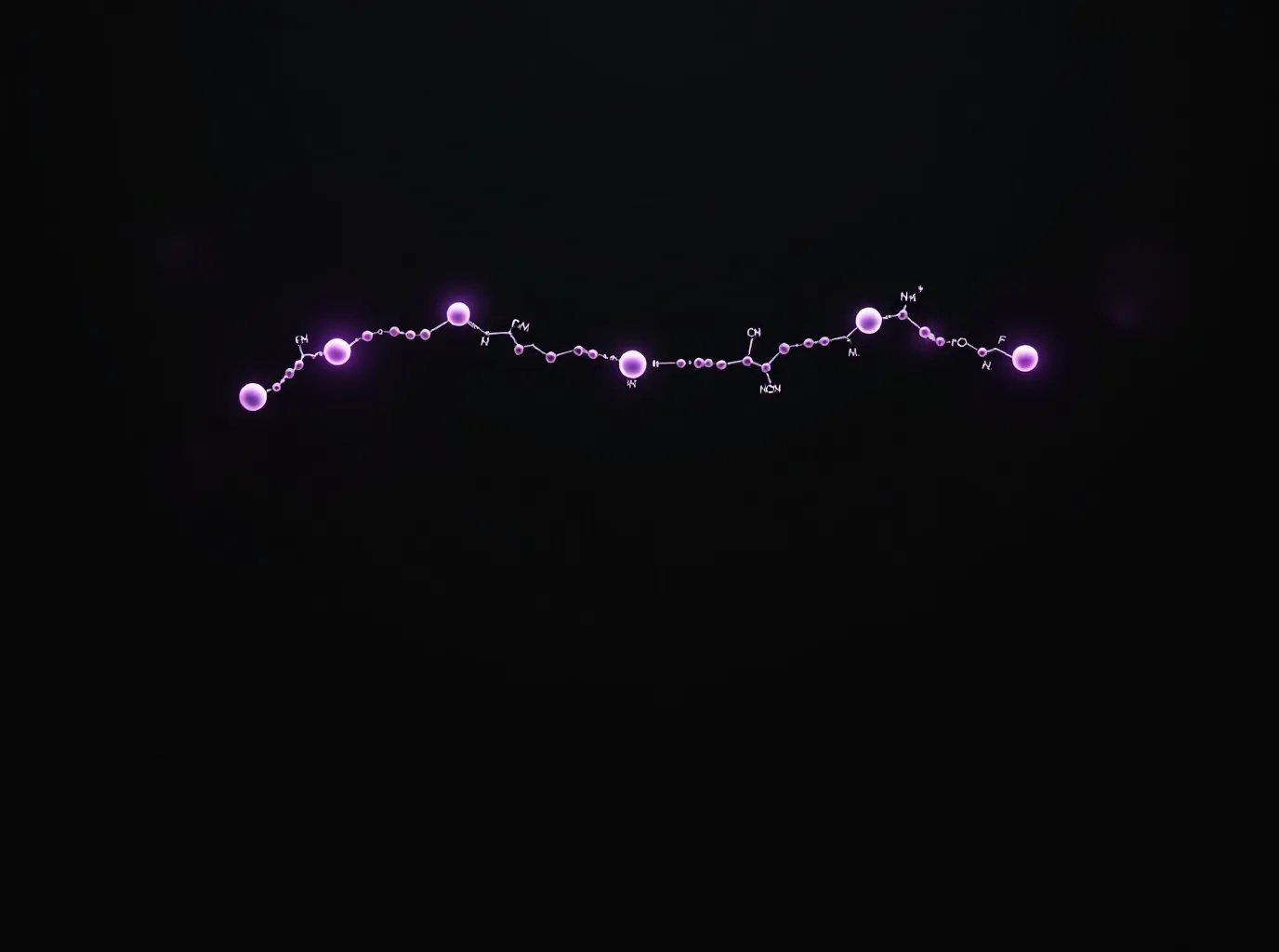
Thymosin Alpha-1 is a 28-amino-acid, N-terminally acetylated thymic polypeptide first isolated from calf thymus (as part of thymosin fraction 5); Goldstein and colleagues purified it and determined its complete amino-acid sequence in 1977 [1]. It is an immunomodulatory peptide cleaved in the body from a larger precursor, prothymosin alpha, and the synthetic drug version carries the generic name thymalfasin.
What does thymosin alpha 1 do?
It adjusts immune activity. Thymosin Alpha-1 signals through Toll-like receptors (TLR2/TLR9) on dendritic cells, driving their maturation and pushing T-cells toward a Th1, cell-mediated response, while an IDO-dependent arm generates regulatory T cells that keep inflammation in check [5]. The net effect studied is restoration of effector immunity alongside damping of over-inflammation — it is an immune modulator, not a growth or muscle-building peptide.
What is thymosin alpha 1 used for?
In countries where it is approved, the synthetic form (thymalfasin) is used mainly for chronic hepatitis B and as an immune adjuvant. The research literature also covers sepsis, COVID-19, HIV immune reconstitution, transplant support, vaccine augmentation, and as a combination immunostimulatory adjuvant in cancers such as melanoma, hepatocellular carcinoma, and lung cancer [7]. It is not FDA-approved for any use in the United States.
Is thymosin alpha 1 FDA-approved?
No. Thymosin Alpha-1 is not FDA-approved for marketing in the United States. The synthetic peptide thymalfasin is approved in roughly 35 other countries for indications such as hepatitis B and immune support; in the US it exists only in investigational and compounding contexts [4]. Its evidence base is uneven — for example, the largest rigorous sepsis trial (TESTS, 2025) found no mortality benefit (HR 0.99, P=0.93) [3].
What is TA1 peptide?
"TA1 peptide" is shorthand for Thymosin Alpha-1 (Tα1) — the same 28-amino-acid, N-terminally acetylated thymic peptide isolated from calf thymus and sequenced by Goldstein and colleagues in 1977 [1]. It is an immunomodulator; the synthetic, sequence-identical drug form is called thymalfasin. The abbreviation does not refer to any different molecule.
Who should not take thymosin alpha 1?
This site gives no personal medical guidance, but the literature flags theoretical cautions. As an immune stimulant, it is a theoretical concern in established autoimmune disease and in deliberately immunosuppressed transplant recipients [5][14], and there is no pregnancy or lactation safety data [4]. Efficacy expectations should also be tempered: the largest rigorous sepsis trial was null (HR 0.99, P=0.93) [3]. Any decision belongs with a qualified clinician.
Is TB-500 the same as thymosin alpha 1?
No. TB-500 is a fragment of thymosin beta-4, a 43-amino-acid actin-binding peptide studied for tissue repair — and the one on the WADA Prohibited List. Thymosin Alpha-1 is a separate 28-amino-acid immunomodulatory peptide cleaved from prothymosin alpha [1]. Different sequence, size, mechanism, and use; the shared word "thymosin" does not make them the same molecule.
How long should you take thymosin alpha 1?
Study durations varied by setting rather than following a single rule: short courses of several days in sepsis trials, daily dosing in COVID-19 cohorts, 12 weeks in the HIV pilot, and twice-weekly dosing for months in hepatitis B and cancer-adjunct protocols [4][8]. The standard single subcutaneous dose studied ranged from 0.8 to 6.4 mg [4]. This is reported as research context, not a duration anyone should adopt.
How long does it take for thymosin alpha 1 to work?
The literature does not define a single "time to effect" because endpoints differ by setting. The peptide clears quickly — an elimination half-life of about two hours — yet immune effects (such as changes in T-cell or thymic-output markers) were measured over weeks in trials like the 12-week HIV pilot [8]. It acts as a biological-response modifier whose downstream effects outlast its presence in blood. No timeline applies to personal use.
What is the dosing protocol for thymosin alpha 1?
Trial protocols, not personal protocols, are on record. The most common chronic regimen studied was 1.6 mg subcutaneous twice weekly (hepatitis B, immune reconstitution) [13][8]; sepsis trials used 1.6 mg every 12 hours for 5–7 days [2][3]; COVID-19 cohorts used 1.6 mg daily [6]. The reviewed single-dose range is 0.8–6.4 mg [4]. These are documented research regimens reported in the third person, not instructions.
How does thymosin alpha 1 make you feel?
Because it is an immune modulator rather than something that produces a sensation, most people report feeling nothing in particular — a common anecdotal report is no perceived effect at all. Documented adverse effects are dominated by mild injection-site reactions, with occasional transient flu-like feelings [4][16]. Reports of feeling "more resilient" are subjective impressions, not measured outcomes, and are labeled anecdotal on the effects page.
How much thymosin alpha 1 should I take?
This site does not provide dosing for personal use and recommends no amount. For research context only: the reviewed single subcutaneous dose ranged from 0.8 to 6.4 mg, and the most common chronic regimen studied was 1.6 mg twice weekly [4][13]. Those are doses given to defined trial populations under medical supervision, reported here strictly as data — not a recommendation. Any such decision belongs with a qualified clinician.
When is the best time to take thymosin alpha 1?
The research literature does not establish an optimal time of day; trial protocols specified frequency (for example, twice weekly, or every 12 hours for a set number of days) rather than a particular clock time [4][2]. Given the roughly two-hour half-life and twice-weekly chronic schedule, timing was driven by the dosing interval in each study. This is research context, not personal advice.
Is thymosin alpha 1 safe to take?
In documented clinical use the synthetic form is generally well tolerated, with mild injection-site reactions the most common adverse effect and no documented organ toxicity at studied doses [4][16]. Theoretical cautions apply in autoimmune disease and transplant recipients, and pregnancy data are absent [5][4]. Unregulated research-grade material carries separate purity and identity risks. Safety for any individual is a question for a qualified clinician, not this site.
Does thymosin alpha 1 help cancer?
It has been studied as an immunostimulatory adjuvant — used alongside chemo- and immunotherapies in melanoma, hepatocellular carcinoma, and lung cancer, acting through dendritic cells and potentially helping "turn a cold tumour hot" while reducing checkpoint-inhibitor toxicity [7]. These are study-attributed findings in combination protocols, not evidence that it treats cancer on its own, and it is not approved for cancer in the US.
Is thymosin alpha 1 worth it?
That is a personal judgment this site cannot make, but the evidence can frame it. The signal is strongest and most reproducible in chronic viral hepatitis [13]; it is benign in safety terms [4]; and it is null in the largest, most rigorous sepsis trial (HR 0.99, P=0.93) [3]. It is also not FDA-approved in the US. The honest read is that benefit is setting-dependent and should not be assumed outside where the evidence is strongest.
Does thymosin affect aging?
Thymosin Alpha-1 research connects to aging mainly through immunosenescence — the age-related decline of immune function — since circulating Tα1 levels fall with age and the peptide has been studied as a vaccine adjuvant in older, immunosuppressed populations [11]. There is no evidence in this record that it is an anti-aging or longevity treatment; the studied effects are immunological, measured in specific clinical settings, not general aging outcomes.
Does thymosin alpha 1 reduce the mortality of severe COVID-19?
The evidence is mixed. A retrospective review of 76 patients with severe COVID-19 found Tα1 associated with significantly reduced mortality (11.11% vs 30.00%, P=0.044), alongside restored T-cell numbers and reversed exhaustion markers [6]. But a 2022 systematic review of roughly 5,300 patients found no statistically significant overall mortality benefit. So the retrospective signal is real but unconfirmed by higher-quality pooled evidence — not established.
Thymosin alpha 1 vs thymosin beta 4 (TB-500) - what's the difference?
They are different molecules that share only the word "thymosin." Thymosin Alpha-1 is a 28-amino-acid immunomodulatory peptide cleaved from prothymosin alpha, studied for immune modulation [1]. Thymosin beta-4 is a 43-amino-acid actin-binding peptide (its fragment is sold as TB-500) studied for tissue repair, and it is the one on the WADA Prohibited List. Different sequence, size, mechanism, and use.
What dose of thymosin alpha 1 are people running?
This site reports studied doses, not community "protocols." In trials, the most common chronic regimen was 1.6 mg subcutaneous twice weekly, with a reviewed single-dose range of 0.8–6.4 mg [4][13]. Anecdotal online accounts vary widely and are not controlled data; they are not a basis for personal dosing, which this site does not provide. Any decision belongs with a qualified clinician.
Any side effects from thymosin alpha 1 injections?
In the documented literature, the dominant adverse effect of Thymosin Alpha-1 injections is a mild injection-site reaction — redness, itching, or brief stinging — with occasional transient flu-like symptoms; large post-marketing surveillance reports no documented organ toxicity at studied doses [4][16]. Community reports echo this, plus occasional headache or tiredness that may be unrelated. These are described on the effects page, with anecdotes clearly labeled.